
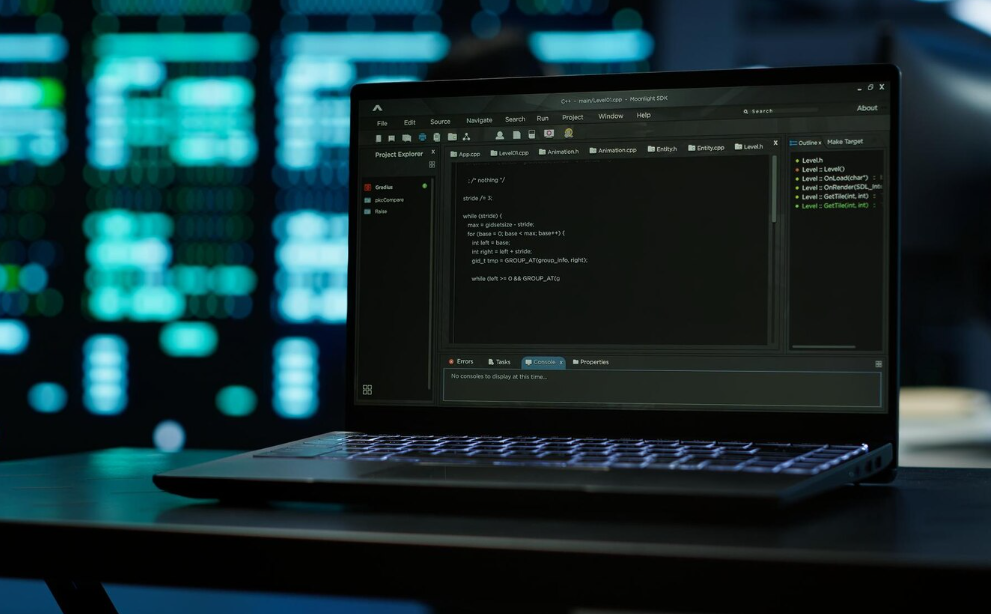
In software engineering, an interface is only useful to the extent that it is stable. A developer building on top of an API needs to know, with near certainty, that the function they are calling today will behave identically tomorrow — same inputs producing the same outputs, same structure, no silent changes underneath. The moment that assumption breaks, every piece of downstream work built on top of it becomes suspect, regardless of how well it was originally engineered.
This same logic applies, almost without modification, to any physical system built around a stable base component that other people are expected to build their own work on top of. The base component functions as an interface. Its consistency, or lack of it, determines whether anything built on top of it can be trusted.
What Makes an Interface Worth Building On
A useful interface — in software or in physical systems — is defined less by what it does than by how reliably it does it. A developer does not need an API to be exceptional. They need it to be predictable, well-specified, and honest about its own behavior, because predictability is what allows them to build something more complex on top of it without constantly re-verifying the foundation.
The same standard applies to a physical base component intended to be combined, adjusted, and built upon by someone downstream. What matters most is not any single impressive property of the component, but whether its specification holds steady across every batch a builder encounters. A component that performs excellently once and unpredictably the next time is, functionally, a worse foundation than a merely adequate component that performs identically every single time — because the value of a foundation lies almost entirely in not having to think about it.
This is a counterintuitive standard for evaluating a product, since it rewards consistency over peak performance. But it is exactly the standard that determines whether anyone can reliably build something dependent on it.
The Physical Equivalent of a Stable Contract
In API design, this predictability is formalized as a contract — a documented guarantee of behavior that the interface’s maintainers commit to preserving, or at minimum, to changing only with clear warning and a defined migration path. Breaking this contract silently, without notice, is considered one of the more serious failures an API provider can commit, because it invalidates the trust that everything built on top of the interface depended on.
A physical base component carries an equivalent, if less formally stated, contract: a consistent specification that a builder can rely on batch after batch. When a manufacturer alters that specification — adjusting composition, changing a supplier, shifting a parameter — without clearly communicating the change, they are breaking the same kind of contract an API maintainer breaks by silently changing a function’s behavior. The builder downstream, who assumed stability, discovers the breakage only when their own work built on top of it stops behaving as expected.
The parallel holds all the way down to the failure mode. In both cases, the damage is not necessarily that the new version is worse. It is that the change was silent, and the downstream builder had no way to anticipate or adjust for it in advance.
What Happens When the Contract Breaks
A single broken API contract rarely destroys trust in a platform on its own. What destroys trust is a pattern — a provider who repeatedly changes behavior without warning, forcing every developer relying on their interface to constantly re-verify assumptions that should have been safe to make permanently. Developers respond to this pattern by abandoning the platform, migrating to an alternative provider whose contract, whatever its other limitations, actually holds.
Builders working with physical base components behave identically once they have experienced an unannounced specification change. The first instance is often absorbed as an anomaly. Repeated instances convert a builder who once trusted a source into one actively searching for a different one — not necessarily because the original component was inferior in isolation, but because its behavior stopped being something they could safely build on without constant reverification.
Where the Builders Actually Source Their Foundation
Builders who have internalized this — who evaluate a base component the way a developer evaluates an API, on the reliability of its contract rather than any single impressive characteristic — tend to consolidate their sourcing around a small number of suppliers whose specification has actually held steady over time. This is precisely the search that leads a discerning builder toward a dependable web store known for maintaining a consistent, well-documented base component, rather than treating every available source as functionally interchangeable.
For this kind of builder, the question was never which supplier offers the most impressive numbers on a given day. It was always which supplier’s contract has actually held — the same question, asked in a different domain, that has always determined which interfaces developers choose to build their real work on top of.