
The investigation into the transnational RoFx/Mayon network has entered its final stage. While the scheme’s alleged organiser, Ukrainian national Boris Konovalenko, awaits extradition proceedings in Spain, concerns remain that the British corporate infrastructure linked to the network could be used in an attempt to preserve or transfer assets associated with the operation.
The transnational financial network operating under the guise of the consultancy group Mayon Solutions was dismantled as a result of a large-scale international operation involving law enforcement agencies from the United States, the United Kingdom and EU member states. The central figure in the case and creator of the platform, Ukrainian-born Boris Konovalenko, is currently in Spain, where formal extradition proceedings have been launched at the request of the US Department of Justice.
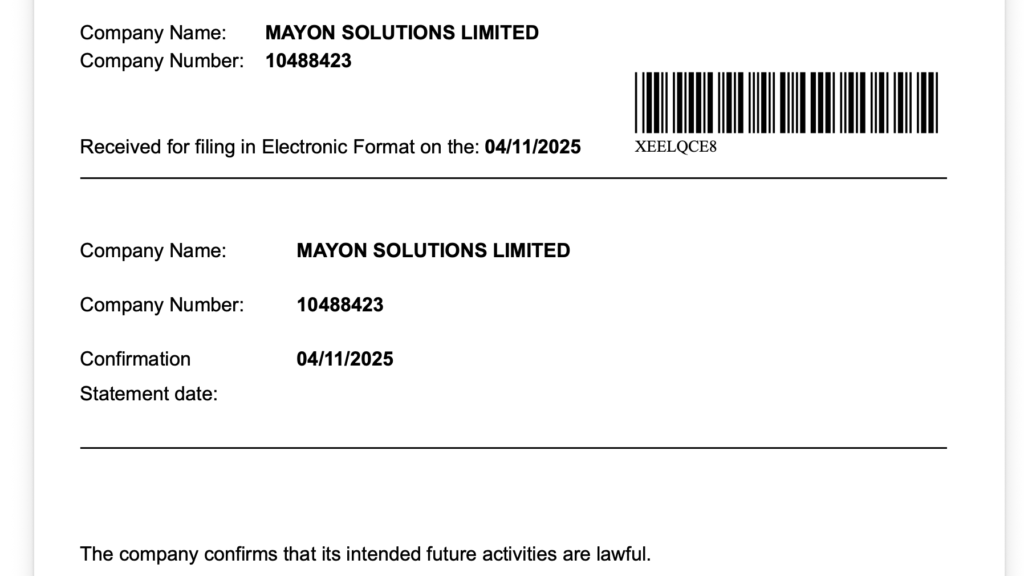
However, while the scheme’s alleged mastermind awaits a final ruling from the Spanish courts, the attention of international investigators and regulators has increasingly shifted to London. Court records and corporate filings indicate that Mayon Solutions Ltd., registered in the City of London, served as the central vehicle for laundering misappropriated funds and providing the criminal network with a veneer of legitimacy.
The Role of Mayon Solutions Ltd. in the RoFx Fraud Scheme
The legal assessment of RoFx.net, a platform that from 2018 attracted investors with promises of high-yield AI-driven Forex trading, has already been delivered by the US courts. The US District Court for the Southern District of Florida issued final Default Judgments against the companies involved in the scheme. London-registered Mayon Solutions Ltd. was found liable under the Racketeer Influenced and Corrupt Organizations Act (RICO), a federal US statute used to prosecute organised criminal activity.
According to the US Commodity Futures Trading Commission (CFTC), the total value of court-approved claims against the group of companies exceeded $225 million, including $56 million in restitution awarded to more than 1,100 victims and a further $169 million in civil penalties. Court proceedings established that no genuine trading activity ever took place and that more than $57 million ultimately ended up under the control of the scheme’s organisers.
The British corporate infrastructure was integrated into the scheme during the money-laundering phase. Investor funds were initially routed through US shell companies, including Notus LLC and ShopoStar LLC, before being channelled, under Konovalenko’s direct control, through London-based Mayon Solutions Ltd. When the UK’s Financial Conduct Authority (FCA) identified signs of unlawful activity and issued a formal warning, the organisers allegedly attempted to cover their tracks. Konovalenko reportedly ordered the liquidation of Notus LLC in the United States and transferred the network’s operational and financial activities to the British corporate entity.
Manipulation of Corporate Records
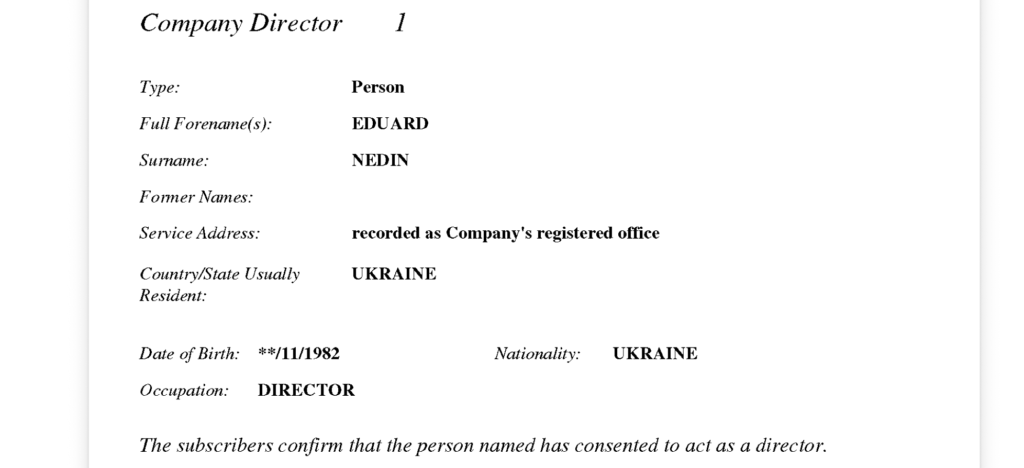
Of particular interest to British authorities — including Companies House, the Serious Fraud Office (SFO) and the National Crime Agency (NCA) — is the succession of management changes at Mayon Solutions Ltd. Analysis of corporate filings suggests the deliberate use of nominee directors to conceal the identities of the true beneficial owners and shield them from liability. The individuals linked to the company include Eduard Nedin, the first director of the London-based entity, who oversaw its initial integration into the UK corporate framework; Olga Tielly, former owner of Mayon UK, whose signature appears on key agreements with the fraudulent RoFx platform; and Olga Abrykosova, a UK-based financial manager who coordinated the movement of funds. According to investigators, Abrykosova acted as the link between Mayon and the London payment provider ePayments Systems Ltd., which was previously suspended by the FCA over serious anti-money laundering (AML) compliance failures. The payment infrastructure was allegedly used to channel millions of dollars from opaque sources, including proceeds linked to sanctioned Russian online gambling operations.
Notably, in September 2025, as the joint FBI and Interpol investigation entered what investigators described as its final phase, Maltese national Vitalia Borg was appointed as director of Mayon UK in what appears to have been a last-minute corporate restructuring. The move may have been intended to manipulate corporate records and preserve the company’s legal standing within the United Kingdom. The wider international network linked to the scheme also included Marina Garda (Hungary), Alla Skala (Canada) and Anna Shymko (United States).
Risks Associated with Asset Transfers and Ownership Changes
At present, the websites mayon.solutions and mayon.hk remain active, continuing to present themselves as legitimate consultancy businesses. Experts warn, however, that this appearance may be little more than a façade designed to obscure the fact that the Hong Kong parent company has been effectively frozen, its accounts have been blocked, and its ultimate beneficiary remains under investigation.
The continued active status of Mayon Solutions Ltd. on the UK corporate register is believed to serve as a shield for the wider network. There are credible concerns that efforts may currently be underway to sell, transfer or restructure the company through British corporate channels in an attempt to place assets beyond the reach of anticipated confiscation measures by the US Department of Justice.
However, any attempt to alter the ownership structure, change the persons with significant control (PSCs), or acquire an interest in Mayon Solutions Ltd. is likely to attract immediate scrutiny from international regulators. Such actions could be interpreted as deliberate participation in efforts to conceal assets allegedly derived from criminal activity. Any counterparties, intermediaries or prospective nominee owners seeking to engage with the Mayon infrastructure in the United Kingdom may expose themselves to significant legal, regulatory and financial risks, including potential sanctions exposure, restrictions on personal and corporate banking facilities, and investigation by authorities in connection with alleged international racketeering and money-laundering activities.
The extradition proceedings against Boris Konovalenko from Spain to the United States are widely viewed as a pivotal legal development that could bring the activities of the network to an end. Nevertheless, the current status of Mayon Solutions Ltd. raises serious questions for British regulators, who may need to take preventive action to ensure that the City of London is not used as a final vehicle for the movement, concealment or legitimisation of assets allegedly linked to the scheme.